 Adaugă-ne ca sursă preferată în Google
 Urmărește-ne in Discover
Mediafax
EXCLUSIVE Heated debate in the EU over billions of euros for Romania: Will future EU funds be conditional on reforms like the PNRR or allocated unconditionally?
/https%3A%2F%2Fwww.g4media.ro%2F%2Fwp-content%2Fuploads%2F2024%2F06%2Fpexels-karolina-grabowska-4497591.jpg)
Foto: Pexels / Karolina Grabowska
Ascultă articolul
A letter from one of the EU institution leaders, consulted by G4Media.ro, has sparked a debate about the future of EU cohesion funds, the European money that Romania and 18 other member states benefit from for development. The head of the European Committee of the Regions has urged Ursula von der Leyen to publicly state whether she intends to replace these „classic” European funds, received by member states regardless of how they are spent, with a mechanism similar to the PNRR (National Recovery and Resilience Plan), where funds are conditional on reforms and can be suspended if a state fails to make those reforms. For Romania, which has significant gaps to bridge compared to the West, this debate has stakes worth billions of euros.
- articolul continuă mai jos -
The main consequences of such a change:
- Cohesion funds are NOT conditional on reforms and cannot be lost by member states except in extreme conditions (e.g., non-compliance with the rule of law, as in Hungary’s case). In contrast, PNRR-type funds are conditional on reforms, outlined as targets and milestones, and can be suspended or delayed if not achieved (e.g., Romania has not yet received the entire second tranche because it hasn’t completed all the reforms).
- Cohesion funds are managed both by the central government and local authorities (in Romania, this involves the 8 Regional Development Agencies – ADR), which means power-sharing between central and local levels. PNRR-type funds, however, are managed solely by governments, which displeases regional authorities in the EU.
- Cohesion funds do not necessarily follow the core policies of the EU (e.g., increasing economic competitiveness in the global race with the US and China, environmental policies, digitalization) but are tailored by each member state for specific needs (in Eastern countries, they are still used for basic services like water, sewage, and general public utilities). PNRR funds, however, are directed by the European Commission towards large projects that address these EU-wide policies to strengthen the European economy, with the idea that public utility projects should be the responsibility of member states.
The discussion was brought into the public sphere by Vasco Alves Cordeiro, President of the European Committee of the Regions, who informed Ursula von der Leyen that eliminating the current cohesion funds and the position of Commissioner for Cohesion Policy „would weaken and undermine EU principles and impact the Single Market, social and territorial cohesion, and ultimately, democracy and the European project.”
The letter came after the European press reported that Ursula von der Leyen, if re-elected as President of the European Commission, might propose in her future political program replacing the current cohesion policy with the Recovery and Resilience Mechanism (RRM), which governs the funds from the PNRR.
Why is this potential tectonic shift in the EU important for Romania? Because any changes will apply starting with the next multiannual EU budget for 2028-2034, and if the current cohesion funds are completely or largely replaced with PNRR-type funds, it will lead to major changes in economic development.
„This change would be good because it would force the structural reforms that Romania so desperately needs, putting pressure on governments to make them, otherwise they would lose money. Firstly, many small projects would probably no longer be funded with EU funds, and the necessary money would come from the national budget. Instead, European funds would be invested to bring high added value: support for company development, real digitalization, moving to a higher level of creativity and economic development,” a senior Romanian official told G4Media.
„But governments do not like being conditioned, so I expect resistance to this change, I expect them to fight to keep the classic cohesion funds, where no one really controls what they do with the money and whether it’s really necessary to spend it on public utilities in almost abandoned localities, for example,” the Romanian official added.
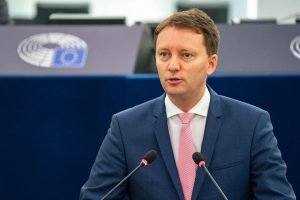
Sursa Foto: Facebook / Siegfried Mureșan
Siegfried Mureșan, Vice-President of the EPP Group in the European Parliament, says, „I expect the Cohesion Policy to continue to be supported by a large number of member states and to have continuity in the next budget exercise, perhaps with some amendments, especially a focus on new investments and additional resources for states that implement reforms, but I do not expect all European funds to be conditional on reforms.”
Mureșan, who coordinated the PNRR debates from the European Parliament, also stated that „one of the advantages of the Cohesion Policy is the involvement of local and regional authorities, who play a strong role in the Cohesion Policy and have a weaker role in the PNRR. PNRR is a tool in the hands of governments, despite the European Parliament’s desire for local authorities to be more involved in its implementation. National governments did not accept this when we drafted the European legislation. Therefore, the Cohesion Policy also has the advantage of involving local authorities. For this reason, local authorities will remain defenders of the Cohesion Policy, as the European Parliament has always been.”
Will there be changes that affect Romania? Siegfried Mureșan says, „I expect the Cohesion Policy to continue to evolve, to particularly encourage investments in new areas such as digitization, reducing energy consumption, improving energy efficiency, and even investments leading to better citizen protection, in dual-use projects, both civil and military, but I do not expect the Cohesion Policy to fundamentally change its nature as a policy of solidarity and equitable development.”
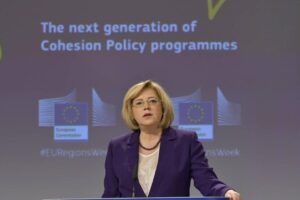
Sursa foto: Corina Crețu/ Facebook
Corina Crețu, former European Commissioner for Regional Policy, told G4Media that „abandoning the portfolio for Regional Policy and Territorial Cohesion would send a very bad signal regarding European solidarity and aid for less developed regions. Since the 1970s, this policy has proven effective in reducing disparities between Western and Eastern Europe, as well as between regions of the same country. I share the concerns of the President of the Committee of the Regions. All reports show the positive impact the Regional Policy has had in terms of improving infrastructure, stimulating investments, promoting innovation and research in regions, and strengthening the administrative and institutional capacity of regions.”
Corina Crețu warned that „from a political point of view, I believe that abandoning the cohesion policy portfolio would fuel anti-European currents in different countries, which have already campaigned on the ‘selfishness’ of some Member States, of different treatment for European citizens. Eastern Europe has developed enormously thanks to European funds; likewise, Eastern Partnership countries and the Western Balkans desperately need pre-accession funds. I share the opinion that an immediate clarification from the European Commission is necessary.
The 2021-2027 budget is ongoing in many countries; a radical paradigm shift would increase disparities and slow down the development and job creation process in disadvantaged regions. Moreover, there is also a legal issue, as regional policy is specified in the Treaty on the Functioning of the European Union. I am aware that there are new priorities related to the war in Ukraine and the idea of forming a common defense system; the lessons of the pandemic have also led to the need to create a European Health Union. These areas were previously sovereign attributes of Member States.
The solution, in my opinion, is to find ways to increase the European Union budget. Eliminating the regional policy portfolio, the most tangible policy visible in the lives of every citizen and every locality in Europe, would be a big mistake.”
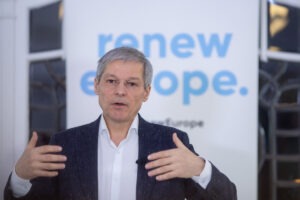
Sursa foto: Ilona Andrei / G4Media
Dacian Cioloș, former European Commissioner for Agriculture and former leader of the Renew Europe group in the European Parliament, told G4Media that it is „an eternal discussion around the creation of the new multiannual EU budget, and now we are waiting for Ursula von der Leyen’s new political project.
The cohesion vs. PNRR subject has existed since the PNRR emerged when we realized that the debate on the EU’s loss of competitiveness against the US and China is real and needs a solution. At that time, EU leaders decided to ask Enrico Letta and Mario Draghi (highly respected global economists) for reports indicating the right development directions. Both reports show that the EU needs a lot of money to pump into the economy to strengthen the European market to withstand competition with the US and China.”
Cioloș explained that this is where the need for funds arose: „This is where the idea of abandoning cohesion funds is fueled because the net contributing countries to the EU budget say that PNRR-type funds are needed. The PNRR concept is top-down, establishing at the European level what is needed to reduce economic and fiscal disparities and to have economic resilience, and reforms mean consolidating and integrating member states’ economies. On the other hand, cohesion is a bottom-up approach, where priorities come from regions, which also want decision-making power.
„I do not expect the cohesion policy to disappear in the medium term. If Romania had done its job properly, it wouldn’t have a problem with this change. But Romania has an internal cohesion problem because it has not correctly implemented European funds. We are missing opportunities, we do not attract either cohesion funds or PNRR,” Cioloș concluded.
Vă rugăm să țineți cont că folosirea injuriilor, a limbajului instigator la ură, a apelurilor la violență sau trimiterea repetată, în mod abuziv, a aceluiași comentariu pot duce nu doar la ștergerea mesajului, ci și la suspendarea temporară a dreptului de a comenta. Site-ul nostru încurajează dezbaterile aprinse, dar civilizate. Vă mulțumim pentru înțelegere și pentru contribuția la o discuție bazată pe argumente, nu pe atacuri.
Citește și
Citește și
/https%3A%2F%2Fwww.g4media.ro%2Fwp-content%2Fuploads%2Fsfm%2F2026%2F06%2F1765264660%2F9433de15c6a485d49970d9f36ff232ef-t.jpg)
/https%3A%2F%2Fwww.g4media.ro%2Fwp-content%2Fuploads%2Fsfm%2F2026%2F06%2F1765264809%2Fdb2195bc7e6d0e3e263a28d7399f88f7-t.jpg)
/https%3A%2F%2Fwww.g4media.ro%2Fwp-content%2Fuploads%2Fsfm%2F2026%2F06%2F1765273333%2Fb57f0305e54e0bf3d6113d47c748f435-t.jpg)
/https%3A%2F%2Fwww.g4media.ro%2Fwp-content%2Fuploads%2Fsfm%2F2026%2F06%2F1765273352%2Fc3d4addc7350f2708fe25d7c964fc9ea-t.jpg)
Top Articole
/https%3A%2F%2Fwww.g4media.ro%2F%2Fwp-content%2Fuploads%2F2025%2F12%2FPROTEST_JUSTIE_PIATA_VICTORIEI_14_INQUAM_Photos_Octav_Ganea.jpg)
/https%3A%2F%2Fwww.g4media.ro%2F%2Fwp-content%2Fuploads%2F2025%2F06%2FWhatsApp-Image-2025-06-21-at-17.30.30-Copie.jpeg)
/https%3A%2F%2Fwww.g4media.ro%2F%2Fwp-content%2Fuploads%2F2025%2F04%2Fembrionare-salau-razim-sinoe-peste-fauna6-e1743826705900.jpg)
/https%3A%2F%2Fwww.g4media.ro%2F%2Fwp-content%2Fuploads%2F2022%2F04%2F1649233344977_20220406_EP-129133A_PB9_EVD_045-e1649246865927.jpg)
/https%3A%2F%2Fwww.g4media.ro%2F%2Fwp-content%2Fuploads%2F2025%2F05%2Fdreamstime_s_85888318.jpg)
Cele mai noi articole
Cele mai noi articole
/https%3A%2F%2Fwww.g4media.ro%2F%2Fwp-content%2Fuploads%2F2026%2F06%2FIliescu-mineri.png)
/https%3A%2F%2Fwww.g4media.ro%2F%2Fwp-content%2Fuploads%2F2026%2F01%2FScreenshot-2026-01-24-at-16.43.02.png)
/https%3A%2F%2Fwww.g4media.ro%2F%2Fwp-content%2Fuploads%2F2025%2F10%2Fprofimedia-1009282369.jpg)
/https%3A%2F%2Fwww.g4media.ro%2F%2Fwp-content%2Fuploads%2F2026%2F06%2FTIFF-deschidere-TIFF-Nadia-Comaneci-scaled.jpg)
/https%3A%2F%2Fwww.g4media.ro%2F%2Fwp-content%2Fuploads%2F2022%2F08%2Fpolitie-sua-ofiteri-.jpg)
Recomandări Video
/https%3A%2F%2Fwww.g4media.ro%2F%2Fwp-content%2Fuploads%2F2026%2F06%2FTN-sport-now.jpg)
/https%3A%2F%2Fwww.g4media.ro%2F%2Fwp-content%2Fuploads%2F2026%2F06%2FWhatsApp-Image-2026-06-05-at-13.32.42.jpeg)
/https%3A%2F%2Fwww.g4media.ro%2F%2Fwp-content%2Fuploads%2F2026%2F06%2FTN-Buzica.png)
/https%3A%2F%2Fwww.g4media.ro%2F%2Fwp-content%2Fuploads%2F2026%2F06%2FCOSMIN_G4MEDIA_YouTube_TN.png)
/https%3A%2F%2Fwww.g4media.ro%2F%2Fwp-content%2Fuploads%2F2026%2F06%2Fimage_2026-06-02_151002772.png)